Best Telescope Mount
The best telescope mount for most upgrading owners is the Sky-Watcher AZ-GTi Computerized Alt-Az Mount at $439, an 11 lb payload GoTo head that can be flashed to equatorial firmware for imaging, because a steady mount matters more to the view than the telescope sitting on top of it.
Say the honest thing plainly, because it is the single most useful sentence on this site: the mount matters more than the telescope. A shaking image at 150x is unusable no matter how good the optics behind it are, and a cheap department store telescope on a wobbly mount is the most common reason beginners give up on the hobby entirely. Spending an extra $100 on the mount and $100 less on the tube almost always buys a better night at the eyepiece than the reverse.
Why does a wobbling mount ruin an otherwise good telescope?
A telescope image is magnified, and magnification amplifies motion exactly as much as it magnifies the target. At 150x, a vibration that would be invisible to the naked eye becomes a visible shudder in the eyepiece, and a target that trails or jitters is functionally unusable regardless of how sharp the optics are. This is why an excellent 8 inch mirror on a flimsy tripod performs worse in practice than a modest 130 mm mirror on a genuinely rigid one. Mounts settle; tubes do not. The tube is only ever as steady as what holds it.
What is the derating rule, and why does a rated payload lie for imaging?
A manufacturer's payload rating is a visual figure, describing how much weight the mount can point accurately, not how still it can hold that weight for a multi-minute exposure. Long exposure imaging needs real tracking headroom the visual number does not budget for, which is why the standard rule of thumb among astrophotographers is to halve the rated visual payload when planning an imaging load. A mount rated for 11 lb visually is planned around roughly 5.5 lb for imaging; a mount rated for 44 lb visually is planned around roughly 22 lb.
What actually counts toward that number is everything riding on the mount head: the optical tube, the camera, a guide scope and guide camera if you run one, the dovetail bar and rings, and the weight of cabling. Counterweights are not part of the payload; they exist specifically to balance the payload around the mount's axis, and a mount that cannot be balanced with its stock counterweight set is a sign the payload itself is too heavy, not a problem to solve by adding weight on the other side indefinitely. Use our mount payload calculator to check a specific telescope and camera combination, and see mount payload by telescope weight for a quick reference table.
How do you actually test whether a mount is steady enough?
The tap test. Point the telescope at a bright star or a distant streetlight at a genuinely high magnification, tap the end of the optical tube gently with a fingertip, and time how long the image takes to settle back to stillness. Under two seconds is a good result, the mount and tripod are both doing their job. Over five seconds means the tripod, not the mount head, is the limiting factor: the legs are flexing under the load, the leg locks are not fully tightened, or the tripod itself is simply too light for the telescope sitting on it. No amount of money spent upgrading the mount head above a flexing tripod fixes a slow settling time, because the tripod is the actual bottleneck.
Run the tap test before assuming a mount purchase solved a shaking problem, and run it again after adding anti-vibration pads , because the improvement is usually immediate and easy to see in the settling time alone.
Which mount should you actually buy, by budget?
Present mounts as a ladder rather than a single winner, because the right one depends on what you are trying to solve: a bad stock tripod, a first GoTo purchase, or a real imaging payload.
Telescope mounts by budget and payload
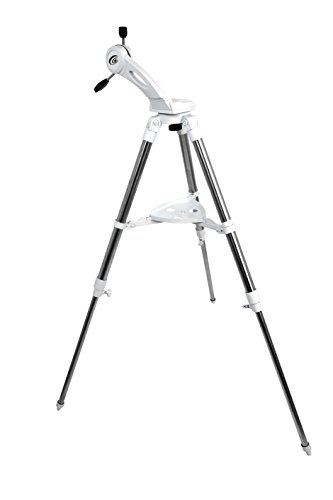
Explore Scientific FirstLight Twilight Nano Alt-Azimuth Mount
A stainless steel tripod and a slow motion alt azimuth head rated to 14 lb, which is more mount than most sub $400 telescopes ship with. Buying this to replace the tripod under a department store refractor is the single cheapest way to make a bad telescope usable.
Best for: Rescuing a good small tube from a bad mount
Check price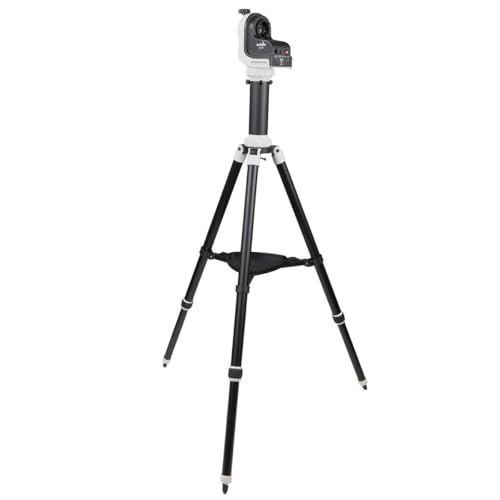
Sky-Watcher AZ-GTi Computerized Alt-Az Mount
GoTo and tracking from a phone in a head that weighs under 4 lb, and it can be flashed to equatorial firmware for short exposure imaging. Eleven pounds of payload is the real limit and it is not generous, so match it to a small refractor rather than an 8 inch tube.
Best for: A small refractor or Maksutov you carry outside every clear night
Check price
Sky-Watcher Star Adventurer GTi Mount Head Kit
A full GoTo equatorial in a package light enough to travel with, carrying a small ED refractor and a camera comfortably. It is the point where a star tracker becomes a real mount, and it will autoguide, which a plain tracker will not.
Best for: A first telescope plus camera imaging rig
Check price
Celestron Advanced VX Computerized Equatorial Mount
Thirty pounds of rated payload, which by the imaging rule of thumb means roughly 15 lb of actual telescope and camera. This is the entry point for long exposure deep sky work with a real telescope rather than a lens.
Best for: An 8 inch SCT or a 6 inch Newtonian used for imaging
Check price
Sky-Watcher EQ6-R Pro GoTo Equatorial Mount
Forty four pounds of payload with belt driven axes and periodic error small enough that autoguiding cleans it up completely. Most people who buy this stop buying mounts, which is the entire argument for spending the money once.
Best for: A permanent or semi permanent deep sky imaging setup
Check pricePrices change often, confirm on Amazon. As an Amazon Associate we earn from qualifying purchases.
The Explore Scientific Twilight Nano is the cheapest fix in the entire hobby: a stainless steel tripod and a slow motion alt-azimuth head rated to 14 lb, aimed squarely at rescuing a good small tube stuck on a bad stock tripod. The AZ-GTi and the Star Adventurer GTi both sit in the middle: the AZ-GTi as a light, phone controlled GoTo head for a small refractor or Maksutov carried outside every clear night, and the Star Adventurer GTi as a step up into a full imaging equatorial that autoguides, which a plain star tracker cannot do. At the top, the Advanced VX and the EQ6-R Pro carry real telescopes for real imaging: 30 lb and 44 lb of rated visual payload respectively, roughly a 4x spread from the AZ-GTi's own rating.
Who should not buy the expert tier?
Anyone whose entire optical setup, telescope plus camera plus accessories, weighs under about 10 lb should not buy the Advanced VX or the EQ6-R Pro. Forty four pounds of rated payload is capacity you will never load onto a small refractor, and you pay for that unused capacity twice: once at checkout, and again every session carrying a mount head and counterweight set sized for a telescope you do not own. These mounts make sense once you already own, or already plan to own, an 8 inch SCT or a 6 inch Newtonian for serious imaging. Buying one before that telescope exists is buying weight and cost ahead of the need for it.
How much payload does each mount actually carry?
| Mount | Price | Visual payload | Imaging payload (derated) |
|---|---|---|---|
| Explore Scientific Twilight Nano | $99.99 | 14 lb | 7 lb |
| Sky-Watcher AZ-GTi | $439.00 | 11 lb | 5.5 lb |
| Sky-Watcher Star Adventurer GTi | $579.00 | 11 lb | 5.5 lb |
| Celestron Advanced VX | $1,099.00 | 30 lb | 15 lb |
| Sky-Watcher EQ6-R Pro | $1,899.00 | 44 lb | 22 lb |
Imaging payload assumes the standard halving rule and leaves margin for autoguiding to correct small tracking errors. Pushing a mount to its full visual rating for imaging work is the most common way a new astrophotographer gets trailed stars they cannot explain.
Alt-azimuth or equatorial: which type do you actually need?
An alt-azimuth mount moves in up-down and left-right axes, which matches how a human points at the sky and is simpler to set up and understand. It is genuinely fine for visual observing at any budget. An equatorial mount has one axis aligned with Earth's rotation, so a single motor tracks the sky's apparent motion without introducing field rotation into a long exposure, which is why every serious imaging mount on this page, other than the dual-mode AZ-GTi, is an equatorial design. If imaging is even a maybe for you down the line, buying equatorial capability now, even on a mount that also runs in alt-azimuth mode day to day, avoids a second mount purchase later. See alt-azimuth vs equatorial mount for the full comparison.
What is the highest return-per-dollar accessory in the hobby?
Anti-vibration pads under the tripod feet, at under $25. They sit between the tripod foot and the ground and absorb the footstep and wind induced vibration a tap test reveals, and the improvement in settling time is usually immediate rather than subtle. Nothing else in this hobby, at any price point, improves the view as reliably per dollar spent. If a mount purchase is not in the budget this season but a shaking image is the actual complaint, start here before anything else.
How does a mount purchase change what telescope you should buy next?
Once a mount has real spare payload, it usually makes more sense to add a better telescope than to buy another mount. An AZ-GTi with headroom under its 11 lb rating suits a small ED refractor well; an EQ6-R Pro with 44 lb of rated capacity can carry an 8 inch SCT and a full imaging camera train without approaching its limit. See our best telescope for astrophotography guide for tube picks sized to each mount tier on this page, and our best star tracker guide if the goal is wide field camera and lens imaging rather than a telescope at all.
What should you check before buying any mount?
Confirm the rated visual payload against your actual telescope's weight plus a reasonable margin, not just against the tube's listed weight alone; fully loaded weight with a diagonal, eyepiece, finder and any camera attached is always higher than the bare optical tube figure printed on the box. Confirm the mount's control method suits how you actually observe: a hand controller works without a phone or app dependency, while phone controlled mounts like the AZ-GTi need a working WiFi connection between phone and mount every session. And if imaging is any part of the plan, confirm the mount either ships with equatorial tracking or can be converted to it, because an alt-azimuth-only mount cannot support long exposure deep sky imaging regardless of how steady it is.
How does polar alignment differ between an alt-azimuth and an equatorial mount?
An alt-azimuth mount needs no polar alignment at all, which is a real part of its appeal for grab-and-go visual sessions: level the tripod, point roughly where the manual or app tells you, and it tracks well enough for visual use within a couple of minutes. An equatorial mount needs its rotation axis pointed at the celestial pole before tracking is accurate, using either a small built-in polar scope sighted on Polaris, or an electronic routine run through the mount's control app or hand controller that plate solves a few reference stars and calculates the pointing error. The electronic method is slower to learn but noticeably more precise once practiced, and it is the method most owners of the Advanced VX and EQ6-R Pro settle into for imaging sessions where a rough polar scope alignment is not accurate enough to hold a multi-minute exposure without star trailing.
What is periodic error, and why does it matter for the mounts at the top of this page?
Every equatorial mount's tracking motor drives a worm gear against a larger ring gear, and tiny manufacturing imperfections in that gear pair cause the tracking rate to speed up and slow down in a repeating cycle called periodic error, typically once per worm gear revolution. Left uncorrected, periodic error shows up as stars that drift slightly back and forth across a long exposure even on an otherwise well aligned mount. Autoguiding corrects most of it in real time by watching a guide star and nudging the mount to compensate, but a mount with inherently small periodic error to begin with asks less of the guiding system and tolerates a poorly guided sub more gracefully. The EQ6-R Pro's belt driven axes, replacing the gear-on-gear drive train of older Sky-Watcher mounts, are the specific design change responsible for its noticeably smoother periodic error curve, which is a meaningful part of why serious imagers treat it as a mount they buy once rather than a stepping stone to something larger.
Related reading
- Best star tracker, for camera and lens imaging before any telescope
- Best telescope for astrophotography, tubes sized to these mounts
- Mount payload calculator, check your own setup's numbers
- Mount payload by telescope weight, a quick reference chart
- How to set up an equatorial mount, polar alignment and balancing
- Alt-azimuth vs equatorial mount, the full comparison
We review them on their own too, in full detail: the Sky-Watcher EQ6-R Pro, the Celestron Advanced VX and the Sky-Watcher AZ-GTi.
Frequently asked questions
What is the best telescope mount overall?
The Sky-Watcher AZ-GTi Computerized Alt-Az Mount at $439. It delivers phone controlled GoTo and tracking in a head that weighs under 4 lb, can be flashed to equatorial firmware for short exposure imaging, and its 11 lb rated payload comfortably suits a small refractor or Maksutov, which covers what most upgrading owners actually need.
Is the mount really more important than the telescope?
Yes, and it is the most common reason beginners quit the hobby. A cheap telescope on a wobbly mount is unusable at anything past low power, because a shaking image at 150x looks broken even when the optics behind it are fine. A mediocre telescope on a steady mount is enjoyable every session; an excellent telescope on a shaking mount is not.
Why do I need to halve a mount rated payload for imaging?
The manufacturer number is a visual rating: what the mount can carry and still point where you tell it. Imaging demands the mount hold that same load still enough for a multi-minute exposure, which needs real tracking headroom the visual rating does not budget for. Halving the rated payload for an imaging load is the standard rule of thumb amateur astrophotographers use to leave that margin.
What actually counts toward a mount payload rating?
The optical tube, the camera and any imaging accessories riding on the mount head: guide scope, guide camera, dew heater controller, cabling weight, and the dovetail bar and rings that hold it all. Counterweights are separate and exist to balance that load, not to add to it. Underestimating the camera train, not the telescope, is the most common way owners overload a mount.
What is the tap test for a mount?
Point the telescope at a bright star at high magnification, tap the end of the tube gently, and time how long the image takes to stop moving. Under two seconds is a genuinely steady mount. Over five seconds means the tripod, not the head, is the limiting factor, and no amount of money spent on the mount head above it will fix a flexing tripod underneath.
What is the single best accessory to add to any mount?
Anti-vibration pads under the tripod feet, at under $25. They absorb the footstep and wind induced vibration that a tap test reveals, and they noticeably calm the image on any tripod mounted telescope within minutes of adding them. Per dollar spent, nothing else in the hobby improves the view as reliably as isolating the tripod from the ground it stands on.
How we choose: we compare published manufacturer specifications, optical figures we can verify, and reviews from owners who have used the equipment under real skies. We do not test gear in person. Never point any telescope, finder or binocular at the Sun without a certified full-aperture solar filter fitted over the front of the instrument.
Recording your own eyepieces, exit pupils and sessions? The Observing & Astrophotography Planner is the paid version of these pages: 8 printable worksheets you fill in with your own numbers, plus the full PDF, $29.